Synergy
EPIC Psychology & Wellbeing is a school led partnership to meet the needs of the children, families and schools within Discovery Schools. A core part of this partnership are group discussion/interest groups led by an EP and an Assistant Psychologist. Each focus group will look at a different theme that is of interest to our schools. A resource pack is prepared for each topic which is shared with all Discovery Schools.
Synergy Overview 2025-2026
When a Child is Not Meeting the Outcomes in the EHCP: Understanding, Responding, and Supporting Progress
Date/location:
Thursday 9th October 2025 at Wellington Place Primary School, Market Harborough
Thursday 19th March 2026 at Keyham Lodge School, Leicester
This Synergy session will focus on best practice when a child or young person is not meeting the outcomes outlined in their Education, Health and Care Plan (EHCP). Designed as a reflective discussion for SENCOs, the session will explore the complexities and challenges that arise when expected progress is not being made.
Key areas of focus will include:
- Identifying early signs that EHCP outcomes are not being met.
- Exploring underlying factors, such as unmet needs, environmental barriers, and systemic issues.
- Adopting a collaborative, child-centred approach to reviewing and adapting support strategies.
- Navigating the statutory review process, including when and how to request amendments to the EHCP.
- Engaging families and multi-agency teams in solution-focused planning.
Participants will be encouraged to share experiences, reflect on current practice, and consider practical strategies to support meaningful progress for children and young people with EHCPs.
Synergy Topic – Positive Psychology
Date/location:
Thursday 11th December 2025 at Braunstone Community Primary School, Leicester
Thursday 7th May 2026 at Mowmarce Hill Primary School, Leicester
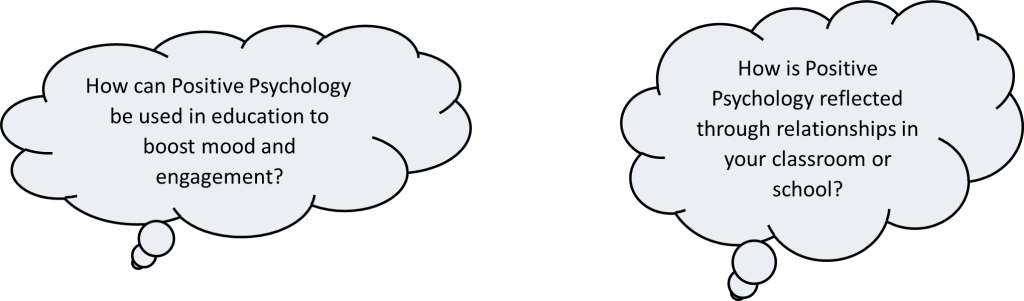
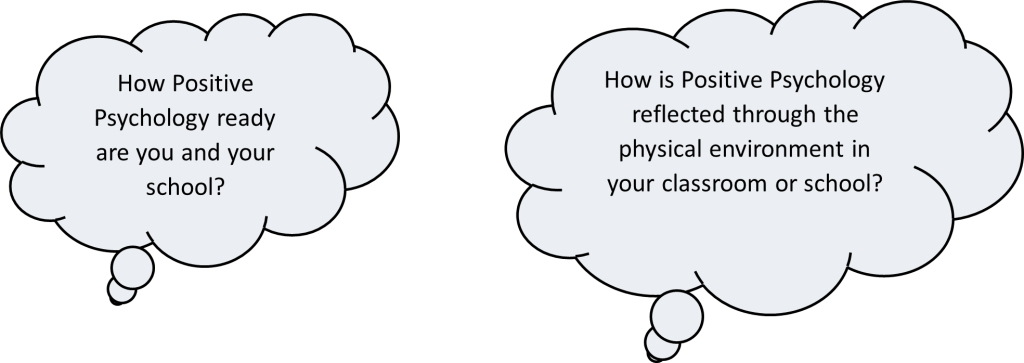
Positive Psychology is the study of what makes life worthwhile. It focuses on supporting people to thrive and it considers strengths and life satisfaction. Positive psychology has relevance for everyone, it is a universal approach. Positive psychology has been shown to reduce anxiety, increase resilience and promote self-growth, well-being and quality of life (Pociho et al., 2022). This Synergy topic will consider how the following three pillars of Positive Psychology relate to your practices and setting:
- Positive Experiences: Includes emotions such as happiness, gratitude, and contentment.
- Positive Individual Traits: Involves strengths of character, resilience and optimism.
- Positive Institutions: Focuses on familial, educational, and societal systems that support the development of positive experiences and individual traits (Seligman & Csikszentmihalyi, 2000), relationships, productivity and meaning.
We will look not only at how to teach and support children using these approaches but also to reflect on ourselves as practitioners. There will be plenty of opportunity for discussions and shared practical examples between schools of how you all practice Positive Psychology.
EPIC Psychology’s Maths Pathway
Date/location:
Thursday 22nd January 2026 at Wellington Place Primary School, Market Harborough
Thursday 25th June 2026 at Braunstone Community Primary School, Leicester
An estimated 25% of people have a maths learning difficulty (British Dyslexia Association), and globally 60% of children don’t achieve minimum proficiency – a situation described as a ‘learning crisis’ (UNESCO Institute for Statistics). These difficulties can impact academic and everyday functioning – a good grasp of maths is linked to greater success in employment and better overall health. Maths difficulties can involve problem with domain-specific abilities, such as fact retrieval and arithmetic as well as general abilities like working memory. Maths anxiety can also be a significant factor for contribution to students’ struggles with maths. Identifying maths difficulties early is essential to prevent long-term academic and mental health problems.
Key areas of focus:
- The difference between a maths difficulty, dyscalculia and maths anxiety by exploring the updated definitions from the SpLD Assessment Standards Committee (March 2025)
- Identifying a maths difficulty early and understanding where the gaps in a child’s maths’ knowledge and skills are (e.g. number sense, arithmetic etc)
- Ways to support both at universal and targeted level
- Promoting maths in the home environment and involving parents/carers in the development of maths skills Participants will be encouraged to share experiences, reflect on current practice, and consider practical strategies and approaches to support the development of maths skills for all children.
Previous Synergy Topics
2024-25
| Topic | Overview | What was valued? |
|---|---|---|
| Bereavement | The focus of this EPIC Synergy session was to: · Allow schools to discuss how they manage when their children/young people experience loss and bereavement · Facilitate discussions around how to support loss and bereavement in schools, and share best practice The discussions focused on: · identifying what has worked well · what are the challenges, triggers and unexpected impacts of loss and bereavement · focusing on best practice. · A chance to problem solve in groups and come up with strategies to support CYP | “Useful to discuss different types of loss a child may experience” “useful models/images to share with others” |
| Complex SEND in mainstream schools | This EPIC synergy sessions focused on supporting children with severe needs in mainstream schools who have significant cognitive, learning, interaction and SEMH needs. | “Great to hear and share others’ ideas and experiences, pick up a few tips” “Some useful ideas to support existing children in class” |
| Demand Avoidance Profile | This Synergy session explored the ‘demand-avoidant profile’ and considered the debate around diagnosis and being recognised by local authorities. Defined as a persistent and marked resistance to demands is a characteristic experienced by and observed in some autistic people. It can impact essential needs like eating and sleeping, and expectations such as going to school. The sharing of best practice for supporting children and young people with a demand-avoidant’ profile was covered. | “a better understanding of strategies to support a demand avoidant profile” “knowing how to manage young people with a demand avoidant profile effectively” |
| Restorative Practices in Schools | This Synergy session was dedicated to Restorative Practices in Schools. It provided a platform for schools to share their experiences with restorative practices, focusing on what has been successful, identifying barriers, and highlighting best practices. We will also engaged in meaningful discussions about the nature of restorative practices, various methods of implementation, and the optimal scenarios for utilising restorative practices. Additionally, EPIC introduced various practical tools for schools to consider. | “Lots of detailed handouts to use and take back to school” “Very useful for my role” |
| Supporting Families | Synergy Topic: Family Support & How to Support Parents/Carers The children we teach and support do not exist in a vacuum, but instead are part of different systems; home, school, community. In order for our children to be socially, emotionally and academically ready for learning, there are a number of facets that need to be in place such as feeling contained, feeling understood, nourished, having needs met, home collaboration with school and services etc. There may be barriers within family systems that prevents these facets from being in place. Not only this but in this current climate there are high frustrations for parents/carers with wider SEND systems which can cause a tension between family and school. This synergy topic considered a family’s risk and resilience profile, how to have difficult conversations, what services and resources are available for families, how parents/carers can become more attuned to their child, parental engagement with school, supporting through the SEND ‘crisis’. Practical ideas were discussed between all schools and facilitators with the aim of providing a clear resource structure for schools when supporting families. | “great signposting suggestions” “sharing information between schools” |
2023-24
| Topic | Overview | What was valued? |
|---|---|---|
| Emotionally Based School Avoidance | This EPIC Synergy session focused on schools’ experiences of EBSA and how it felt for you as a school working with the children and families. It opened up discussion around predisposing factors and any common trigger points school noticed and how they helped with early identification and facilitated intervention. It was important to share the factors that maintain a child’s EBSA and what schools have done about these. Schools had the opportunity to consider how to use protective factors around a child using a child-centred approach and family engagement to facilitate progress. | “Discussion focused, not death by powerpoint and reading straight from the powerpoint – thank you!” |
| Assessing for SEMH needs across the school | This EPIC Synergy session allowed schools to discuss their experiences of assessing SEMH needs across the school – identifying what works well and the barriers, focusing on best practice. It also facilitated discussion around the nature of the SEMH needs school want to assess and the reasons for this, emphasising what the data will be used for. EPIC introduced some tools that schools could consider. Discussions were framed from a risk and resilience model. | “A deeper understanding of identifying SEMH needs” “Great to have a discussion based CPD to have the opportunity to talk to others” |
| Girls on the Spectrum: Identifying and Support their Unique Needs | This EPIC Synergy session facilitated discussion around how to identify girls who may be on the spectrum and how discrepancies between narratives from home and school may be interpreted and understood. It provided a chance to share thoughts and experiences around camouflaging as a way of understanding girls with actual or potential autism. Schools shared a range of experiences that they have had when teaching and supporting girls on the spectrum and what the main strengths and difficulties appear to be. Finally there was plenty of discussion around how to support these unique needs across a range of situations. | “Sharing ideas, experiences with other colleagues and schools” “Time to talk and hear from colleagues” |
| EP Recommendations: what do they mean and how to operationalise them? | During this EPIC Synergy session we discussed the recommendations provided in educational psychology reports. We explored the meaning behind these recommendations and how they can be implemented to support students in schools. We also discussed the roles of class teachers and SENCos in ensuring the successful implementation of these recommendations and how this could look in a school and class setting. | “Understanding what scoring means in certain charts” “Helpful to consider how and why the report is set out and to consider how I need to liaise with people in school to roll out suggestions in report” |